Understanding Abstract Art

How to Look at a Painting That Doesn't Look Like Anything

A plain-English guide to abstract paintings, focal points, and why a canvas with no recognizable subject can still stop you in your tracks — from the artists and instructors at Sugar Land Art Center & Gallery.
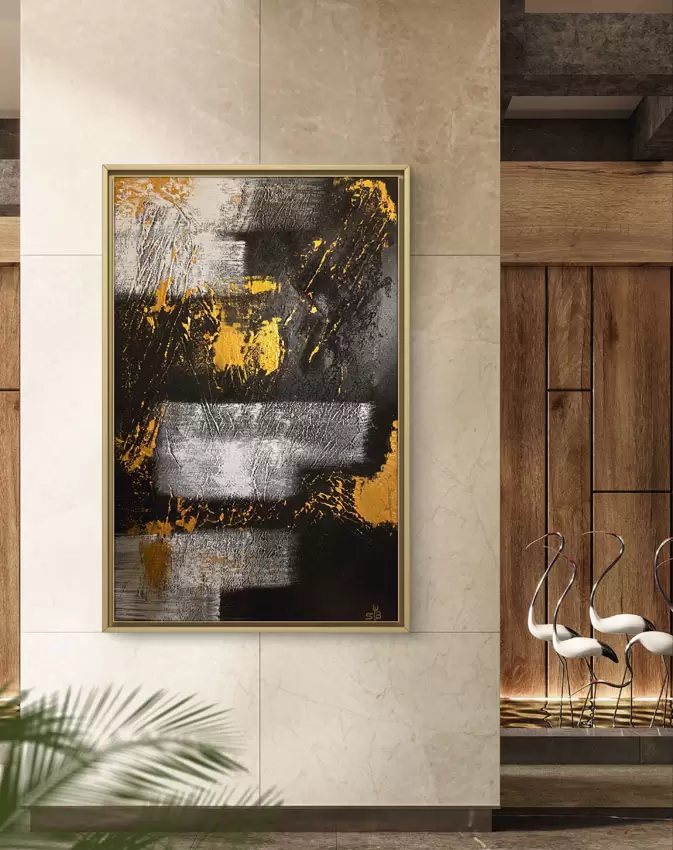
Nearly every visitor who walks into an art gallery has had the same quiet moment in front of an abstract painting: a canvas full of color and movement, no recognizable subject, and a small internal voice that says I don’t know what I’m looking at. If that sounds familiar, you are in very good company — and you are not missing anything. Understanding abstract art has far less to do with art history degrees than most people assume, and far more to do with learning which questions to ask. This guide walks you through what abstract art actually is, the visual language artists use to build it, why the focal point of a painting matters more than almost any other element, and how to look at abstract paintings with real confidence the next time you visit a fine art gallery in Sugar Land, Fort Bend County, or anywhere in the Greater Houston area.

What Is Abstract Art, Really?

Abstract art is artwork that does not set out to reproduce an accurate picture of visual reality. Instead of a barn, a bowl of fruit, or a portrait, an abstract painting treats color, shape, line, texture, and composition as the subject itself. Some abstract work is described as non-objective, meaning it references nothing in the visible world at all. Other pieces are semi-abstract: a landscape, a figure, or a city skyline simplified, exaggerated, or broken apart until only its essence is left on the canvas.

That distinction matters, because first-time gallery visitors often assume abstract paintings are random or careless. They rarely are. Behind almost every serious abstract work sits a long series of deliberate decisions — about balance, contrast, edge quality, layering, and exactly where your eye should travel first. The artist simply chose to speak through those decisions instead of through a recognizable object. The paint is the subject.

Ombra della Luna, abstract mixed media painting by Scott Bulkley
Semi-abstract mixed media: it begins somewhere real and ends somewhere emotional.

Stop Asking "What Is It?" and Start Asking "What Is It Doing to Me?"

When we look at a realistic landscape or a portrait, the brain runs a fast identification check: do I recognize that? Barn. Ocean. Grandmother. Once the check comes back yes, we feel satisfied and move along the wall. Abstract art removes that shortcut on purpose. There is no barn to identify, so the check never finishes — and that unfinished sensation is what most people mistake for confusion.

Try the other question instead. Does this color make your shoulders drop, or your pulse pick up? Do those lines feel like a held breath or a shout? Does the painting feel crowded, spacious, restless, warm, cold, hopeful? Answer that honestly and you are officially understanding abstract art. There is no second, more advanced level you are missing.

It helps to think about music. Nobody walks out of a concert complaining that the melody didn’t look like anything. A slow cello line feels heavy. A bright horn feels like good news. Nothing was pictured, yet something was clearly communicated. Abstract painting is that same conversation, held in pigment instead of sound.

The Visual Language of an Abstract Painting

Abstract artists work with a small vocabulary of visual tools. Learn these five and you will start seeing structure in paintings that looked chaotic five minutes earlier.

Color & Temperature

Warm reds, oranges, and golds advance toward you and raise the emotional temperature. Cool blues and greens recede and settle a canvas down. Artists use that push and pull to build depth without drawing a single object.

Line & Shape

A jagged diagonal unsettles. A long horizontal calms. Hard geometric edges read as order and control; loose organic shapes read as breath and growth. The shapes carry the mood before your brain names anything.

Texture & Surface

Many abstract paintings are physically built up — sand, charcoal, modeling paste, palette-knife ridges, scraped-back layers. Step close and you can read the artist's hand and the order the decisions were made in.

Value & Contrast

Value is simply how light or dark something is. Contrast between light and dark is the strongest attention magnet in painting — stronger than color itself — and it is the primary tool artists use to build a focal point.

Space & Negative Space

The quiet, empty areas of a canvas are not leftovers. Negative space gives the busy passages room to breathe, controls pacing, and is often the single hardest thing for a beginning painter to leave alone.

City of Gold, large golden abstract landscape painting by Scott Bulkley
Squint at any abstract painting and the focal point is the passage that survives.

Focal Point: Where the Artist Wants Your Eye to Land

If you learn only one concept from this article, make it this one. The focal point is the area of a painting the artist has engineered to grab your attention first. In a portrait it is usually the eyes. In an abstract painting there is no face to fall back on, so the focal point has to be constructed out of pure visual force — and once you know how it is built, abstract paintings stop feeling like puzzles and start feeling like designed experiences.

A focal point does three jobs at once. It gives your eye a front door into the painting. It gives your eye a place to rest so the composition doesn’t exhaust you. And it anchors a visual path — a route your gaze travels around the canvas and keeps returning to. A painting with no focal point tends to feel restless and unresolved; a painting with three competing focal points feels like three people talking at the same time.

Six Ways Artists Build a Focal Point

Here is a trick painters use constantly, and it works just as well for viewers: squint. Narrowing your eyes throws away detail and color and leaves only the big value shapes. Whatever still jumps out when the painting is reduced to blurry light and dark is the focal point. Try it on the next abstract canvas you stand in front of — it takes about two seconds and it works nearly every time.

Composition, Balance, Rhythm, and Movement

Once you have found the focal point, look at how the rest of the canvas supports it. Composition is the arrangement of every element within the frame — the plan the painting was built on. Balance is how visual weight is distributed: a large quiet area on one side can be balanced by a small intense area on the other, the same way a small child balances an adult on a seesaw by sitting farther out.

Look for rhythm as well — repeated marks, shapes, or colors that echo across the canvas the way a bassline repeats under a melody. Repetition creates unity; variation within the repetition keeps it from becoming wallpaper. Finally, notice movement: the path your eye actually travels. Start at the focal point and pay attention to where you go next, and next after that. In a strong abstract painting that path loops rather than exits, which is exactly why the work stays interesting on the two-hundredth viewing.

Reign in Gold, acrylic sand and charcoal on canvas by Scott Bulkley
Acrylic, sand, and charcoal — texture you can only read up close.

"If a painting changes how a room feels when you walk into it, it has already succeeded."

Why an Artist Would Leave the Picture Out Altogether

For most of recorded history, painting had a clear job: record what things looked like. Then the camera arrived and did that job instantly and perfectly. Painters were suddenly free to chase what a lens cannot capture — grief, elation, momentum, memory, the sensation of a hot Texas afternoon rather than a photograph of one. Abstract art is not a picture of something that failed to come out right. It is a deliberate attempt to hand you a feeling directly, without routing it through a recognizable object first.

There is also a very practical reason original abstract art hangs in so many homes, lobbies, and offices across Sugar Land and Fort Bend County. A realistic scene tells you one fixed story, and after a few weeks your eye finishes reading it and stops looking. An abstract painting never fully closes. It shifts with the light, the season, and your own mood — you will find a color on a Tuesday morning you would have sworn was not there on Sunday. It sets an emotional temperature in a space the way furniture never can: energy in a dining room, calm in a bedroom, confidence in an entryway. And because it is not tied to a literal subject, it is remarkably easy to live with. It converses with your space instead of competing with it.

A Five-Step Method for Looking at Any Abstract Painting

There Is No Wrong Answer — and That Is the Design

If you see a thunderstorm in a canvas and the person standing beside you sees a crowded street, neither of you is mistaken. The artist offered a starting point; you finish the work from your own memories, and the person next to you finishes it from theirs. That is not a loophole for people who feel unqualified to talk about art. It is the entire point of the form, and it is the reason abstract paintings hold up to years of daily viewing while a literal illustration wears out in a month.

The best possible next step is simply to stand in front of real work. Photographs of abstract paintings lose exactly what makes them worth owning: scale, surface, texture, and the way pigment shifts as you move past it. Screens flatten all of that. A gallery does not.

See Abstract Art in Person in Sugar Land

Sugar Land Art Center & Gallery is a nonprofit fine art gallery in Fort Bend County, free and open to the public, with original abstract paintings, mixed media, photography, and sculpture by working local artists. Walk the gallery slowly. Skip the wall labels on your first pass. Find the one piece you keep looking back at — and then ask the artist what they were feeling when they made it. It is the best question in the building.

Want to try it yourself instead of just looking? Sugar Land Art Center & Gallery offers art classes and workshops in abstract painting, watercolor, drawing, and mixed media for beginners through advanced students. You can also browse our resident artists, see what is currently hanging in the gallery, check upcoming exhibitions and events, or contact us with questions about a specific piece.